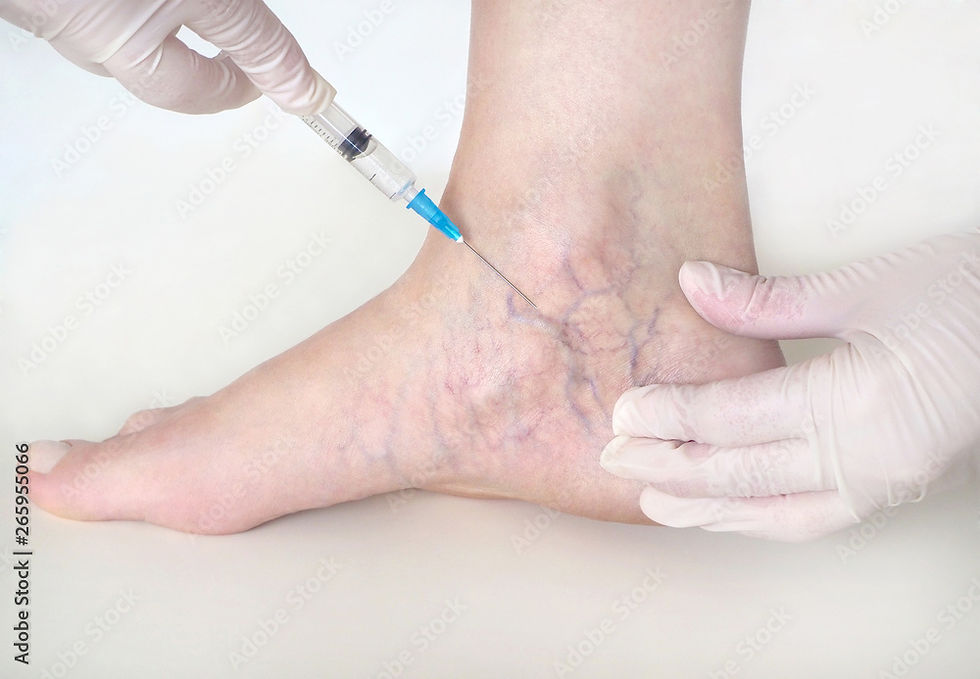
Chronic Venous Insufficiency (CVI)

CVI occurs when leg veins cannot efficiently return blood to the heart. Blood may pool in the legs, causing swelling, aching, heaviness, skin changes, and in some cases venous ulcers.
What Causes Chronic Venous Insufficiency (CVI)?
Weak or damaged vein valves
Vein wall weakness
Increased pressure in the leg veins
Prolonged sitting or standing
Obesity, pregnancy, or aging
Family history of vein disease
What are the Signs & Symptoms of Chronic Venous Insufficiency (CVI)?
CVI occurs when leg veins can't efficiently return blood to the heart, causing blood to pool in the lower legs. Symptoms typically worsen throughout the day (especially with prolonged standing/sitting) and improve with leg elevation — a key feature that helps distinguish it from PAD.
Early/Common Symptoms
Leg swelling (edema) — especially around the ankles, typically worse by evening and improves overnight or with elevation
Aching, heaviness, or fatigue in the legs — often described as "tired legs"
Leg pain or cramping, sometimes worse after standing for long periods
Itching in the lower leg or ankle area
Throbbing or tingling sensations
Restless legs, particularly at night
Visible Changes
Varicose veins — enlarged, twisted, bulging veins visible under the skin
Spider veins (telangiectasias) — smaller, thread-like visible veins
Skin discoloration — reddish-brown or dark staining, particularly around the ankles (from blood breakdown products depositing in tissue over time — called hemosiderin staining)
Skin changes/texture — dry, thickened, or hardened skin (a condition called lipodermatosclerosis in advanced cases)
Shiny or leathery-looking skin
Advanced/Severe Symptoms
Venous stasis ulcers — open sores, typically around the inner ankle (medial malleolus); these are:Usually shallow with irregular borders
Often surrounded by discolored, hardened skin
Slow to heal and prone to recurrenceWeeping or oozing from swollen skin (venous eczema/stasis dermatitis)
Cellulitis (skin infection) — can occur if skin breaks down or ulcers become infected
Atrophie blanche — smooth, ivory-white scarred patches, sometimes surrounded by dilated small blood vessels
What are the Risk Factors of Chronic Venous Insufficiency (CVI)?
Age 50 or older
Family history
Prolonged sitting or standing
Obesity
Pregnancy and multiple pregnancies
Hormone therapy
Previous blood clots (DVT)
How is Chronic Venous Insufficiency (CVI) Diagnosed?
Physical exam and review of symptoms
Duplex ultrasound to evaluate vein function
Additional imaging needed
Treatment Options